
Pedorthic Services.
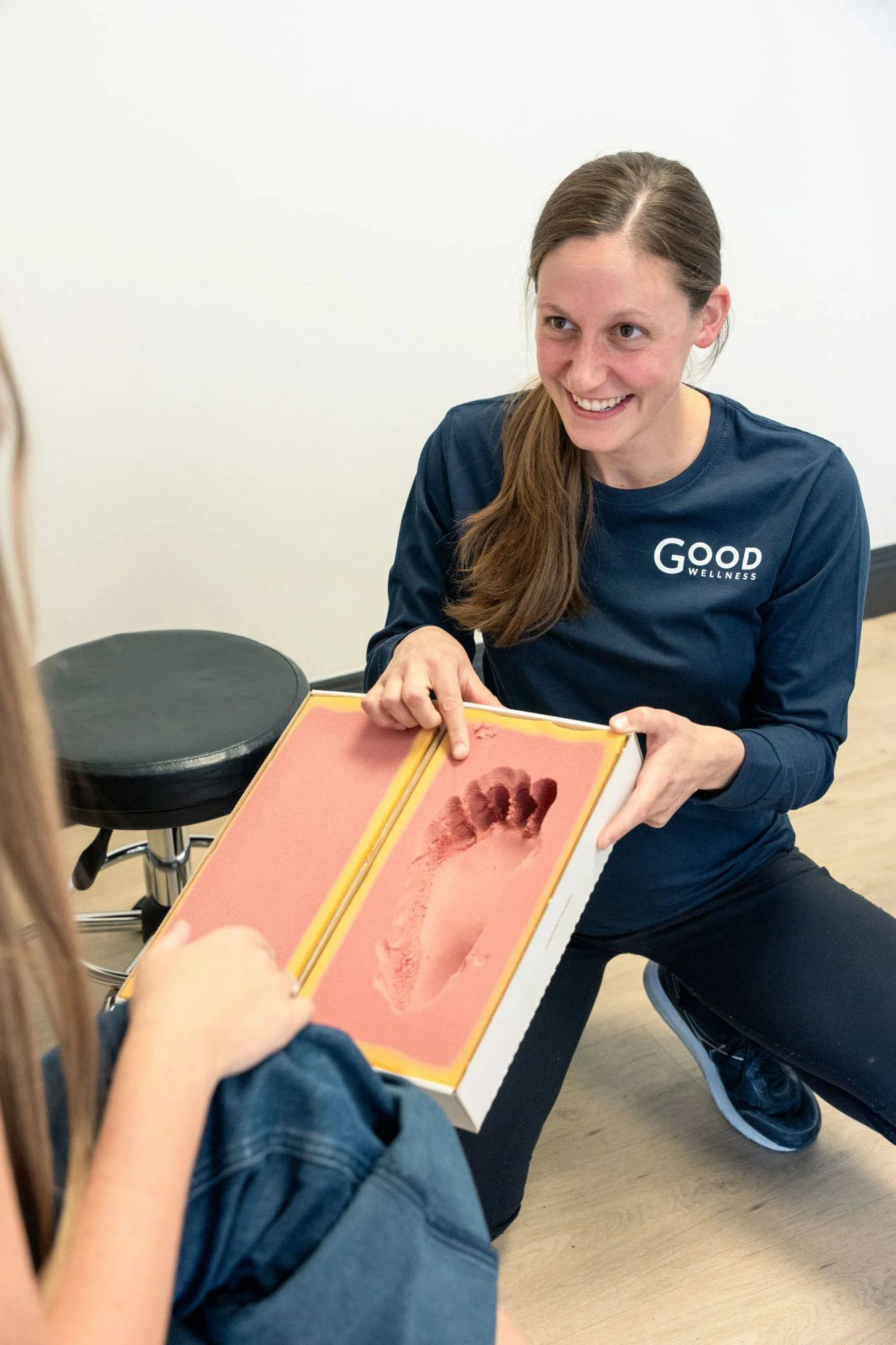
Personalized Foot, Lower-Limb & Footwear Assessment
Your feet are involved in almost everything you do. Walking, running, standing, working, exercising, playing sports, and simply getting through your day all depend on your feet and lower limbs working together.
When foot pain, recurring injuries, uncomfortable footwear, or changes in the way you move start getting in the way, a pedorthic assessment in Barrie can help you better understand what's happening.
At Good Wellness Clinic in Barrie, Ontario, pedorthic services are provided by Julia Hayman, Canadian Certified Pedorthist and owner of On the Ball Orthotics.
A pedorthic assessment looks at more than just your feet. It considers how your feet and lower limbs function together, the footwear you use, the activities you participate in, and your individual goals.
What Is a Pedorthist?
A Canadian Certified Pedorthist is a healthcare professional who specializes in the assessment of the foot and lower limb, particularly as they relate to movement and footwear.
A pedorthist can assess how your feet function and determine whether a pedorthic intervention may be appropriate.
This may include recommendations related to:
Custom orthotics
Footwear
Footwear modifications
Lower-limb mechanics
Activity-specific footwear
Other strategies to support comfortable movement
The goal is not simply to find something to put in your shoes.
It's to understand the bigger picture and determine what may actually be helpful for you.
When Should You See a Pedorthist?
You don't necessarily need to have severe foot pain to benefit from a pedorthic assessment.
A pedorthist may be able to help if you're experiencing:
Foot, heel, or arch painRecurring ankle discomfort
Foot fatigue after standing or walking
Pain while running or participating in sports
Recurring lower-limb injuries
Knee or hip discomfort
Difficulty finding comfortable footwear
Uneven or unusual shoe wearRecurring blisters or pressure points
Concerns about your child's footwear
Difficulty returning to an activity after an injury
These symptoms don't automatically mean that you need custom orthotics.
They are simply reasons to take a closer look at how your feet, footwear, and lower limbs are functioning.
What Happens During a Pedorthic Assessment?
A pedorthic assessment is individualized to you and your reason for coming in.
Your assessment may include:
Your Symptoms & Health History
We'll discuss where you're experiencing discomfort, when it occurs, what activities affect it, and how it's impacting your everyday life.
Your Feet & Lower Limbs
Your foot structure, range of motion, strength, mobility, alignment, and other relevant factors may be assessed.
Your Posture & Gait
Looking at how you stand and walk can provide useful information about how your feet and lower limbs are working together.
Your Footwear
The shoes you wear every day can tell us a lot.We'll consider the type of footwear you use, how it fits, how it is wearing, and whether it is appropriate for your activities.
Your Activities & Goals
Your needs are different if you spend eight hours standing at work, run several times a week, play hockey, or simply want to walk comfortably without pain.Your activity level and goals are an important part of determining what recommendations may be appropriate.
Does Seeing a Pedorthist Mean I Need Orthotics?
No.
This is one of the most important things to understand about pedorthic care.
Not everyone needs custom orthotics.
Depending on your assessment, recommendations may include:
Custom orthotics
Different footwear
Footwear modifications
Exercises or strengthening
Mobility work
Activity modifications
Other healthcare services
No intervention at all
If custom orthotics are recommended, they are just one part of the overall solution. Learn more about Custom Orthotics in Barrie →
Footwear Assessments
Your footwear can have a significant impact on your comfort and how your feet function throughout the day.
Different activities place different demands on your feet.
Running shoes, work footwear, hockey skates, athletic shoes, and everyday footwear all have different purposes.
A pedorthic assessment can help you understand what to look for when choosing footwear based on your feet, activities, and individual needs.
Sometimes a change in footwear may be all that's needed.
Footwear & Orthotic Modifications
In some situations, changing or modifying your footwear may be appropriate.
Depending on your individual needs, pedorthic care may include recommendations or modifications designed to improve comfort, accommodate specific foot concerns, or work alongside custom orthotics. Your footwear is an important part of the equation—not simply something your orthotics go inside.
Pedorthic Care for Runners & Athletes
Running and sport place repetitive demands on your feet and lower limbs.
If you're experiencing recurring pain, discomfort, or injuries that interfere with your ability to participate, a pedorthic assessment can help identify factors related to your feet, footwear, and movement that may be worth addressing.
Your footwear and support needs can also vary depending on the activity you participate in.
Pedorthic Care for Children
Children's feet are constantly growing and developing, and their footwear needs can change quickly.
Growing feet do not automatically require custom orthotics.
However, if your child experiences recurring foot or lower-limb discomfort, difficulty participating in activities, unusual shoe wear, or concerns about their footwear or movement, a professional assessment can help determine whether additional support may be appropriate.
How Can Your Feet Affect the Rest of Your Body?
Your feet don't work in isolation.Every step involves your feet, ankles, knees, hips, and pelvis working together.
Changes in foot mechanics can influence how forces are distributed through the lower limb, but that doesn't mean every knee, hip, or back problem originates in the feet.
Pain is complex and often has multiple contributing factors.
That's why a pedorthic assessment looks at the whole movement system, rather than assuming your feet are the cause of every problem.
Why Choose a Canadian Certified Pedorthist?
When you're trying to understand a foot or lower-limb concern, it's important to have your individual situation assessed rather than relying on a generic solution.
A Canadian Certified Pedorthist has specialized training in foot and lower-limb assessment, footwear, and orthotic management.
At Good Wellness, Julia takes the time to understand your symptoms, activities, footwear, and goals before making recommendations.
Pedorthic Services in Barrie, Ontario
Julia Hayman, Canadian Certified Pedorthist and owner of On the Ball Orthotics, provides pedorthic assessments and custom orthotic care at Good Wellness Clinic in Barrie.
Whether you're experiencing foot pain, dealing with a recurring injury, looking for better footwear, returning to sport, or simply wondering whether your feet could be contributing to the way you move, a pedorthic assessment can help you better understand your options.
You don't need to know what you need before your assessment. That's what the assessment is for.
-
A pedorthist specializes in the assessment of the foot and lower limb, particularly as they relate to movement and footwear. A Canadian Certified Pedorthist may assess your feet, gait, lower-limb mechanics, footwear, symptoms, and activity level to determine whether pedorthic care may be appropriate.
-
A pedorthic assessment is an individualized assessment of your feet and lower limbs. It may include evaluating your foot structure, range of motion, strength, posture, gait, movement patterns, footwear, symptoms, and activity demands. The goal is to understand how these factors may be contributing to your concerns and determine what options may be appropriate.
-
A referral is not always required to see a pedorthist, although requirements can vary depending on your insurance plan. If you're planning to submit the assessment or custom orthotics through extended health benefits, check with your insurance provider to determine whether a referral or prescription is required.
-
No. A pedorthic assessment does not automatically mean that you'll be recommended custom orthotics. Depending on your individual assessment, recommendations may include footwear changes, footwear modifications, exercises, mobility work, activity modifications, custom orthotics, or no intervention.
-
Pedorthists and podiatrists have different areas of training and practice. A Canadian Certified Pedorthist specializes in the assessment of the foot and lower limb as they relate to footwear and orthotic management. Podiatrists are healthcare professionals who specialize in the medical and surgical care of the foot and ankle. The appropriate professional depends on your specific concern.
-
A pedorthist may assess people experiencing foot, heel, arch, ankle, knee, or other lower-limb concerns. They may also work with people experiencing recurring sports injuries, foot fatigue, footwear problems, or difficulty finding comfortable shoes. An assessment helps determine whether pedorthic care is appropriate for your specific situation.
-
Yes. A pedorthic assessment can help identify factors related to your feet, footwear, movement, and lower-limb mechanics that may be contributing to foot discomfort. Depending on the findings, recommendations may include footwear changes, custom orthotics, modifications, or other strategies.
-
Sometimes. Your feet and lower limbs work together during walking, running, and other activities, so assessing foot and lower-limb mechanics may be useful when someone has recurring knee or hip symptoms. However, knee and hip pain can have many contributing factors, and a pedorthic assessment does not assume that the feet are the cause.
-
A pedorthic assessment may be helpful for runners experiencing recurring foot or lower-limb discomfort or injuries. Your running footwear, training demands, movement patterns, symptoms, and foot mechanics can all be considered when determining whether pedorthic care may be appropriate.
-
Yes. Children can be assessed by a pedorthist when there is a reason to evaluate their feet, footwear, or lower-limb function. Growing feet do not automatically require orthotics. A child's development, activities, symptoms, footwear, and movement should all be considered when determining whether additional support is appropriate.
-
Bring the footwear you regularly wear, particularly the shoes associated with the activity or symptoms you're concerned about. This may include running shoes, work footwear, athletic shoes, or everyday footwear. If you currently use orthotics or insoles, bringing those along can also be helpful.
-
The length of an assessment can vary depending on your concerns and the type of assessment required. Your appointment may include a discussion of your symptoms and history, assessment of your feet and lower limbs, gait and movement assessment, and evaluation of your footwear
-
A Canadian Certified Pedorthist can assess whether custom orthotics may be appropriate and provide orthotic management based on your individual needs. At Good Wellness Clinic, pedorthic services and custom orthotic care are provided by Julia Hayman, Canadian Certified Pedorthist and owner of On the Ball Orthotics.
-
Coverage varies between insurance providers and individual plans. Some extended health plans provide coverage for pedorthic assessments, custom orthotics, or both. Check your specific benefits plan to determine your coverage and whether any documentation or prescription is required.
-
It depends on your symptoms and goals. If your concern involves your feet, footwear, lower-limb mechanics, recurring foot or lower-limb problems, or questions about custom orthotics, a pedorthic assessment may be appropriate. When necessary, care can also involve other healthcare professionals depending on what your assessment reveals.
-
Pedorthic services are available at Good Wellness Clinic in Barrie, Ontario, with Julia Hayman, Canadian Certified Pedorthist and owner of On the Ball Orthotics. She provides individualized pedorthic assessments, footwear recommendations, and custom orthotic care.